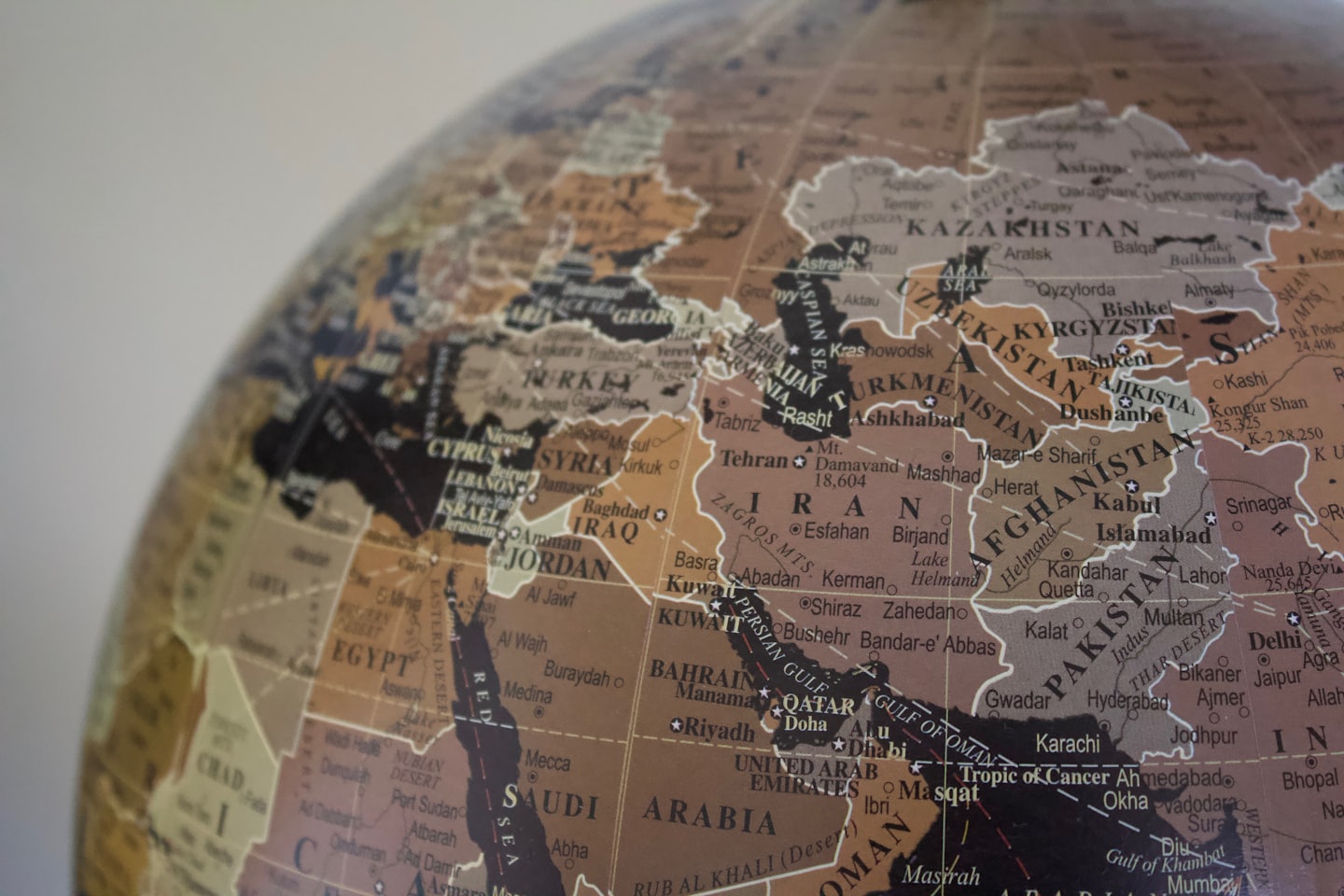
WARS OF THE 21ST CENTURY & THE EVOLUTION OF TERRORISM
Global Conflicts, Political Violence and International Security, 1945–2026
Edition: October 2026
Scope: Contemporary wars and conflicts, 2000–2026; historical evolution of terrorism, 1945–2026.
Purpose: Historical reference, geopolitical analysis and strategic overview.
EXECUTIVE OVERVIEW
The international security environment in 2026 is shaped by the coexistence of conventional warfare, civil wars, insurgencies, terrorist organisations, organised criminal violence and strategic competition between states. These forms of violence have different origins and objectives, but they increasingly interact across national borders.
The twenty-first century began with the expansion of international counterterrorism following the attacks of 11 September 2001. The subsequent wars in Afghanistan and Iraq transformed regional politics, while the Arab Spring, the Syrian civil war and the rise of the Islamic State demonstrated how political crises can create opportunities for armed movements to capture territory and build transnational networks.
The return of large-scale interstate warfare became particularly visible with Russia’s full-scale invasion of Ukraine in February 2022. Meanwhile, conflicts in Sudan, Myanmar, the Sahel and eastern Democratic Republic of the Congo demonstrate that severe violence can persist for years without receiving sustained international attention.
The Middle East remains a major arena of regional confrontation. The Israel–Palestine conflict, the war in Gaza, tensions involving Lebanon and Hezbollah, Yemen’s fragmented political landscape, and the strategic rivalry between Iran and its adversaries have interconnected regional and international consequences.
In South and Central Asia, Afghanistan’s political transformation has not eliminated militant violence. Pakistan faces serious security challenges involving the Tehrik-e-Taliban Pakistan and other armed organisations, while Kashmir remains a longstanding territorial dispute between nuclear-armed India and Pakistan.
In Latin America and the Caribbean, organised criminal groups, trafficking networks and weak institutions drive severe violence in Mexico, Ecuador, Haiti and parts of Colombia. These situations may resemble warfare in their intensity, but they should not automatically be classified as terrorism or civil war.
Historical context is essential. Contemporary jihadist organisations, separatist movements and revolutionary groups did not emerge in a vacuum. Their histories are connected to decolonisation, state repression, ideological competition, foreign intervention, political exclusion and the evolution of communications and military technology.
This document therefore presents two complementary perspectives:
- Wars of the 21st Century, 2000–2026: A regional and chronological overview of major wars, insurgencies and persistent security crises.
- The Evolution of Terrorism, 1945–2026: A historical analysis of the organisations, ideologies, tactics and political environments that have shaped modern terrorism.
The objective is not simply to list violent events. It is to explain how conflicts begin, why they persist, how they change and what their consequences mean for international security.
PART I — WARS OF THE 21ST CENTURY, 2000–2026
1. Global Conflict at a Glance
| Conflict or security crisis | Main period covered | Principal actors | Central issues |
|---|---|---|---|
| Afghanistan | 2001–2021 war; continuing insecurity after 2021 | Taliban, former Afghan government, international forces, IS-K | State-building, insurgency, militant networks |
| Iraq | 2003 onward | Iraqi state, insurgents, Islamic State, militias, foreign forces | Regime change, sectarian conflict, state capacity |
| Syria | 2011 onward | Successive governments, opposition factions, Kurdish-led forces, jihadist groups, external powers | Civil war, territorial control, political transition |
| Israel–Palestine and Gaza | Longstanding conflict; major escalation from October 2023 | Israel, Hamas, Palestinian authorities and factions, regional actors | Security, occupation, statehood, hostages, civilian protection |
| Yemen and the Red Sea | 2014 onward | Houthis, internationally recognised government, other Yemeni factions, regional powers | State fragmentation, regional rivalry, maritime security |
| Russia–Ukraine | 2014 onward; full-scale invasion from 2022 | Russia, Ukraine, supporting international partners | Sovereignty, territory, deterrence, European security |
| Sudan | 2023 onward | Sudanese Armed Forces, Rapid Support Forces, other armed actors | State power, territorial control, humanitarian catastrophe |
| Sahel and West Africa | Especially 2012 onward | Governments, JNIM, Islamic State affiliates, local armed groups | Insurgency, weak governance, communal insecurity |
| Somalia | 1991 onward; al-Shabaab insurgency from the 2000s | Somali authorities, al-Shabaab, international partners, other armed groups | State reconstruction, insurgency, regional security |
| Eastern Democratic Republic of the Congo | Long-running; M23 resurgence from 2021 | Congolese forces, M23, local armed groups, regional actors | Territorial control, displacement, regional tensions |
| Myanmar | Current phase from the 2021 coup | Military authorities, resistance forces, ethnic armed organisations | Military rule, political legitimacy, territorial control |
| Afghanistan–Pakistan borderlands | Especially 2000s onward | Pakistani state, TTP, Afghan Taliban, other militant networks | Cross-border militancy, border security |
| India–Pakistan and Kashmir | 1947 onward; recurrent escalations in the 21st century | India, Pakistan, Kashmiri political and armed actors | Territory, sovereignty, security, nuclear deterrence |
| Haiti | Severe crisis from 2021 onward | Haitian authorities, armed gangs, international security partners | State collapse, gang control, public security |
| Mexico | Intensified security crisis from the 2000s | Government forces, cartels, criminal organisations | Trafficking, territorial control, corruption |
| Ecuador | Sharp security deterioration in the 2020s | Government, criminal organisations, prison-based networks | Drug trafficking, extortion, institutional security |
| Colombia | Decades-long conflict; major peace process from 2016 | Government, ELN, FARC dissidents, criminal groups | Insurgency, rural control, illicit economies |
| Nigeria and the Lake Chad Basin | Especially 2009 onward | Nigerian and neighbouring governments, Boko Haram, ISWAP, other armed groups | Jihadist insurgency, local grievances, displacement |
Important classification note: This table includes interstate wars, civil wars, insurgencies and severe security crises. It does not imply that every case is legally a war or that every armed group is a terrorist organisation.
2. Afghanistan: Intervention, Insurgency and the Return of the Taliban
Period: 2001–2021 international war; continuing insecurity after the Taliban’s return to power in 2021.
Origins and development
The US-led intervention began in October 2001 following the September 11 attacks and the Taliban government’s provision of sanctuary to al-Qaeda. The Taliban government was rapidly removed from power, and an internationally supported Afghan political order was established.
The initial military victory did not produce a durable security settlement. The Taliban reorganised as an insurgency, exploiting local grievances, rural networks, weak institutions and opposition to foreign military presence.
The conflict expanded into a long war involving Afghan government forces, NATO personnel, Taliban fighters and other armed organisations. Pakistan’s role, cross-border militant networks and disagreements over regional security complicated the campaign.
The Afghan state struggled with corruption, political divisions, limited institutional reach and dependence on international military and financial support. Civilian casualties, displacement and restrictions imposed by armed actors became enduring features of the conflict.
Negotiations between the United States and the Taliban culminated in the 2020 Doha agreement. International forces withdrew, and the Afghan government collapsed in August 2021 as the Taliban captured Kabul.
Situation and strategic significance
The Taliban’s return ended the internationally backed republic but did not eliminate violence. Islamic State Khorasan Province, or IS-K, continues to represent a distinct militant threat, including attacks on civilians and religious minorities.
The Taliban government’s restrictions on women and girls, economic hardship and limited international recognition have complicated Afghanistan’s recovery. Relations with Pakistan have also deteriorated over militant activity and border security.
Afghanistan demonstrates that removing a government and defeating a conventional opponent do not necessarily produce stable institutions. It also illustrates the limits of external state-building when political legitimacy, security and governance remain fragile.
3. Iraq: Regime Change, Insurgency and the Islamic State
Period: 2003–2026.
Origins and development
The United States and its partners invaded Iraq in March 2003, overthrowing Saddam Hussein’s government. The invasion was justified by claims concerning weapons of mass destruction and security threats, but the principal weapons claims were not substantiated by the subsequent search.
The removal of the regime was followed by institutional disruption, insurgency and escalating sectarian violence. Decisions concerning the Iraqi security apparatus and public administration contributed to a political and security vacuum.
Al-Qaeda in Iraq emerged as a major insurgent and terrorist organisation. Its attacks on civilians and sectarian targets intensified violence and helped create conditions for the later rise of the Islamic State.
The Islamic State captured Mosul in 2014 and seized large areas of Iraq and Syria. Its rule involved mass executions, enslavement, persecution of minorities, forced displacement and systematic coercion.
Iraqi forces, Kurdish forces and an international coalition gradually retook the group’s principal urban strongholds. Iraq declared victory over the Islamic State’s territorial control in 2017, although clandestine cells survived.
Situation and strategic significance
The collapse of the Islamic State’s territorial project did not end all militant activity. Iraq continues to manage questions involving militia influence, political competition, governance, reconstruction and the security of disputed territories.
Iran’s influence, US military involvement and tensions among Iraqi political factions remain important to the country’s strategic environment. The relationship between the central government and the Kurdistan Region also continues to shape internal politics.
Iraq demonstrates the unintended consequences that can follow regime change without a stable political settlement. It also illustrates how insurgency, sectarian mobilisation and transnational jihadism can reinforce one another.
4. Syria: Civil War, International Intervention and Political Transition
Period: 2011–2026.
Origins and development
Protests against Bashar al-Assad’s government began in 2011 amid the wider Arab Spring. The government’s violent response contributed to the militarisation of the uprising and the fragmentation of the opposition.
The conflict developed into a multidimensional civil war involving government forces, local opposition groups, Kurdish-led forces, jihadist organisations and foreign states. Russia and Iran supported Assad’s government, while Turkey, the United States and other actors pursued different military and political objectives.
The Islamic State captured extensive territory in Syria and Iraq, imposing brutal rule and organising attacks beyond its territorial base. Kurdish-led forces and an international coalition played major roles in the campaign that dismantled the group’s territorial caliphate.
The war caused massive civilian casualties, destruction of infrastructure and the displacement of millions of Syrians. Chemical-weapons allegations and investigations, detention abuses and attacks affecting civilian areas became central international concerns.
The Assad government fell in December 2024, creating a new political phase. The end of the previous regime did not automatically settle the country’s competing territorial, political and security disputes.
Situation and strategic significance
Syria’s post-Assad transition involves questions of political representation, minority protection, security-sector reform, reconstruction and the integration or disarmament of armed factions.
The future of Kurdish-led forces, the role of external military powers and the risk of renewed extremist mobilisation remain important issues. Continued insecurity can also affect neighbouring Lebanon, Iraq, Turkey, Jordan and Israel.
Syria demonstrates how a domestic uprising can become an internationalised conflict when regional and global powers support different actors. It also shows that regime change does not, by itself, resolve the institutional and social conditions that sustained war.
5. Israel–Palestine and the Gaza War
Period: Longstanding conflict; major escalation from 7 October 2023.
Origins and development
The Israeli–Palestinian conflict concerns competing national claims, security, statehood, territory, refugees, occupation and the status of Jerusalem. Its modern history includes the 1948 war and Palestinian displacement, the 1967 war and occupation of additional territories, successive uprisings, failed negotiations and recurring cycles of violence.
The Palestinian political landscape has become divided, particularly between Fatah-led Palestinian Authority institutions in parts of the West Bank and Hamas’s de facto rule in Gaza from 2007. Israel cites security threats and attacks by armed groups, while Palestinians point to occupation, settlement expansion, restrictions and the absence of sovereign statehood.
On 7 October 2023, Hamas and other Palestinian armed groups attacked southern Israel, killing civilians and security personnel and taking hostages. Approximately 1,200 people were killed in Israel, according to widely cited Israeli figures, and 251 people were taken hostage.
Israel responded with a large-scale military campaign in Gaza. The war caused extensive destruction, mass displacement and a catastrophic humanitarian crisis, with very high Palestinian death tolls reported by Gaza’s health authorities.
The conflict also intensified regional tensions involving Hezbollah, Iran-linked armed groups, the United States and other actors. The war raised major questions about civilian protection, hostage-taking, the conduct of hostilities, humanitarian access and the future governance of Gaza.
Situation and strategic significance
By 2026, the central questions include the durability and implementation of ceasefire arrangements, the fate of hostages and detainees, reconstruction, security guarantees and the political future of Gaza and the wider Palestinian territories.
Casualty figures and claims concerning specific incidents must be dated and attributed, particularly where independent access is limited. The conduct of all parties must be assessed under applicable international law.
The conflict has consequences beyond Israel and Palestine. It affects regional deterrence, maritime security, diplomatic relations, domestic politics in numerous countries and international debates about humanitarian law.
A sustainable settlement would need to address both Israeli security concerns and Palestinian rights, political representation and self-determination. Military operations alone cannot resolve the underlying political conflict.
6. Yemen and the Red Sea: Civil War and Maritime Insecurity
Period: 2014–2026.
Origins and development
Yemen’s conflict developed from the breakdown of the political transition that followed the 2011 uprising. The Houthi movement, rooted in northern Yemen’s Zaydi community and political networks, captured Sana’a in 2014 and displaced the internationally recognised government from the capital.
In 2015, a Saudi-led coalition intervened in support of the recognised government. The conflict became part of a broader regional contest involving Saudi Arabia, Iran and their partners, although Yemen’s internal political and social dynamics remain important in their own right.
Years of fighting devastated infrastructure, displaced civilians and weakened already fragile institutions. The conflict involved airstrikes, missile attacks, ground combat, blockades and extensive allegations of violations affecting civilians.
A UN-brokered truce in 2022 reduced some forms of fighting, but it did not produce a comprehensive peace agreement. Yemen remained politically fragmented, with different authorities controlling different areas.
Following the escalation of the Gaza war, Houthi forces attacked commercial shipping in the Red Sea and launched attacks they described as connected to the conflict. External naval and air operations expanded the regional dimension of the crisis.
Situation and strategic significance
Yemen’s internal conflict and the Red Sea maritime crisis are connected but distinct. The first concerns governance, territory and political power within Yemen; the second affects international shipping, regional deterrence and global trade.
The Red Sea and Bab el-Mandeb are strategically important routes linking the Indian Ocean with the Suez Canal and the Mediterranean. Attacks on vessels can cause shipping diversions, higher costs and broader economic disruption.
A durable settlement would require arrangements among Yemeni factions, regional actors and international mediators. Maritime security operations alone cannot resolve Yemen’s internal political fragmentation.
7. Russia–Ukraine: Interstate War and European Security
Period: 2014–2026; full-scale Russian invasion from 24 February 2022.
Origins and development
The current phase of the conflict began in 2014, when Russia annexed Crimea and fighting erupted in eastern Ukraine between Ukrainian forces and Russian-backed separatists. The conflict reflected a wider confrontation over Ukraine’s political direction, territorial sovereignty and relationship with Russia and Western institutions.
Diplomatic efforts, including the Minsk agreements, failed to secure a durable settlement. In February 2022, Russia launched a full-scale invasion of Ukraine, creating the largest interstate war in Europe in decades.
The conflict has involved large-scale artillery, missiles, drones, trench warfare, electronic warfare, cyber operations and attacks affecting energy and civilian infrastructure. Ukraine has received extensive military and financial support from Western states, while Russia has mobilised substantial resources and developed external partnerships.
The war has caused extensive military and civilian casualties, mass displacement and major damage to housing, industry, transport and energy infrastructure. Both sides have faced scrutiny over specific attacks and alleged violations of international humanitarian law.
The conflict has also reshaped European defence policy, NATO planning, sanctions, energy markets and relations between Russia and Western governments.
Situation and strategic significance
The war remains central to European security and the future of the European order. Territorial control, security guarantees, military aid, sanctions and the prospects for negotiations remain critical issues.
The conflict demonstrates the continuing relevance of conventional military power, industrial production, logistics and manpower, even as drones and precision weapons change battlefield practices.
It also highlights the dangers of escalation between nuclear-armed states. A sustainable settlement would need to address sovereignty, territorial claims, security arrangements and the risk of renewed hostilities.
8. Sudan: Civil War and State Fragmentation
Period: April 2023–2026.
Origins and development
War erupted in April 2023 between the Sudanese Armed Forces and the Rapid Support Forces, a powerful paramilitary organisation. The confrontation grew out of a struggle over the future of the state and the integration of rival security structures during Sudan’s troubled political transition.
The conflict rapidly spread through Khartoum and other areas. Fighting, shelling, looting and attacks affecting civilians destroyed homes, hospitals, markets and essential infrastructure.
Darfur became another major theatre of violence, with reports of mass killings, ethnic targeting and atrocities. The conflict has also disrupted agriculture, trade and humanitarian supply chains, contributing to severe food insecurity.
Millions of people have been displaced within Sudan or have crossed into neighbouring countries. Humanitarian organisations have faced major obstacles in reaching civilians, while the country’s institutions and economy have been severely weakened.
External interests and regional relationships complicate efforts to secure a ceasefire. The conflict is not simply a contest between two commanders; it concerns the control of state institutions, armed power and the future political order.
Situation and strategic significance
Sudan represents one of the most severe humanitarian emergencies of the mid-2020s. It also threatens regional stability through refugee movements, cross-border armed activity and competition among external actors.
A durable peace would require a ceasefire, humanitarian access, accountability for atrocities and a credible political process. A military victory by one faction would not necessarily restore inclusive governance or prevent renewed conflict.
The war demonstrates how the fragmentation of security institutions can destroy a political transition and turn a struggle for power into a nationwide humanitarian catastrophe.
9. The Sahel: Jihadist Insurgencies and Weak State Authority
Period: Especially 2012–2026.
Origins and development
The modern Sahel crisis expanded after the 2012 breakdown of security in northern Mali, following the collapse of the Libyan regime and the movement of weapons and armed personnel across the region. Local separatist grievances, longstanding governance problems and competition over territory also contributed.
Jihadist organisations linked to al-Qaeda and the Islamic State expanded their activities across Mali, Burkina Faso and Niger. Jama’at Nusrat al-Islam wal-Muslimin (JNIM) became a major al-Qaeda-linked coalition, while Islamic State affiliates developed their own territorial and operational networks.
The conflict has spread beyond military bases and urban centres into rural communities and border areas. Armed groups exploit limited state presence, local disputes, economic exclusion and mistrust of security institutions.
Military coups in Mali, Burkina Faso and Niger changed regional alliances and security cooperation. Relationships with Western states shifted, and the military authorities pursued alternative partnerships.
Civilians face attacks by jihadist groups, communal violence, forced displacement and abuses attributed to some state forces and allied militias. The crisis is therefore broader than terrorism alone.
Situation and strategic significance
The Sahel remains one of the world’s most significant theatres of jihadist violence. The Global Terrorism Index 2026 identifies sub-Saharan Africa as the epicentre of global terrorism, with six of the ten most affected countries located in the region. <Cite refs={[“turn532692search1″,”turn532692search22”]}/>
The conflict increasingly threatens coastal West African states, including Benin and Togo. Cross-border networks and limited regional cooperation make the problem difficult to contain within national boundaries.
Military operations can disrupt armed groups but cannot independently resolve land disputes, political exclusion, corruption, abuses or the lack of public services. Long-term security depends on legitimate governance, local protection, regional cooperation and credible justice.
10. Somalia: State Collapse and Al-Shabaab
Period: State collapse from 1991; major al-Shabaab insurgency from the 2000s.
Origins and development
The overthrow of Siad Barre in 1991 led to the collapse of central authority and prolonged factional warfare. International intervention in the 1990s failed to establish lasting stability, and Somalia remained fragmented among political factions, clan-based networks and armed groups.
The emergence of the Islamic Courts Union in the 2000s altered the balance of power. After Ethiopian intervention in 2006, the militant movement al-Shabaab developed into a major insurgent force.
Al-Shabaab uses bombings, assassinations, coercion and attacks on civilians while fighting Somali authorities and international partners. It has also conducted major attacks outside Somalia, particularly in Kenya.
The Somali government and international partners have undertaken repeated operations to recover territory. However, gains have often proved difficult to consolidate because of limited state capacity, local political disputes and the group’s ability to exploit gaps in security.
The conflict is linked to regional security, maritime routes, displacement and humanitarian pressures. Somalia’s political reconstruction remains complicated by federal tensions and disagreements over the distribution of power.
Situation and strategic significance
Al-Shabaab remains a major threat to Somalia and the wider Horn of Africa. The movement’s resilience demonstrates that territorial losses do not necessarily destroy an insurgent organisation if it retains networks, revenue, coercive capacity and access to vulnerable communities.
Long-term stability requires effective local administration, credible security institutions, political inclusion and sustained development. Military pressure remains relevant but is insufficient on its own.
Somalia is also a reminder that state collapse can create prolonged security problems affecting neighbouring countries and international partners for decades.
11. Eastern Democratic Republic of the Congo: M23 and the Great Lakes Conflict
Period: Long-running conflict; renewed M23 rebellion from 2021.
Origins and development
Eastern Democratic Republic of the Congo has experienced decades of armed conflict involving local militias, foreign armed groups, Congolese forces and regional actors. The wars that followed the 1994 Rwandan genocide and the collapse of political authority in the region left enduring security problems.
M23 emerged in 2012, alleging that the Congolese government had failed to implement an earlier agreement. The movement was defeated militarily but re-emerged in 2021 and expanded its operations.
The Congolese government has accused Rwanda of supporting M23; Rwanda has disputed aspects of the accusations while citing its own security concerns. These disputes contribute to the risk of regional escalation.
The wider conflict includes the Allied Democratic Forces, local self-defence groups, competition over land, communal tensions and the presence of valuable mineral resources. However, mineral wealth alone does not explain the conflict’s origins or persistence.
Civilians face displacement, killings, sexual violence, forced recruitment and disruption of agriculture and public services. The repeated movement of armed groups makes humanitarian access and long-term reconstruction difficult.
Situation and strategic significance
The conflict affects the wider Great Lakes region and places pressure on diplomatic relations between the DRC and neighbouring states. It also illustrates the limits of peace agreements that do not address local security, political inclusion and accountability.
International mediation and regional diplomacy are essential, but implementation depends on the behaviour of armed groups and governments on the ground.
The conflict should not be reduced to a simple struggle over minerals. It is a complex regional security crisis involving state weakness, local grievances, armed networks and competing political interests.
12. Myanmar: Civil War After the 2021 Coup
Period: Current phase from February 2021.
Origins and development
Myanmar’s military seized power in February 2021, removing the elected government and suppressing widespread protests. Resistance evolved from demonstrations and civil disobedience into armed opposition in multiple regions.
The conflict brought together the military authorities, the National Unity Government’s resistance networks, People’s Defence Forces and longstanding ethnic armed organisations. Their goals and political structures are not identical, although many oppose military rule.
Fighting has spread across several states and regions. The military has relied on air power and other forms of coercion, while resistance forces and ethnic armed organisations have captured territory and challenged military positions.
Civilians face airstrikes, displacement, restrictions on humanitarian access and destruction of infrastructure. The conflict has also weakened the economy and increased the number of people dependent on aid.
Myanmar’s long history of ethnic armed conflict predates the 2021 coup. The current war is therefore both a struggle over national political authority and part of a wider history of contested autonomy and military rule.
Situation and strategic significance
The conflict has challenged the military’s ability to maintain control across the country. It also creates risks for neighbouring states through refugee movements, illicit economies, cross-border crime and regional instability.
A political settlement would need to address the military’s role, democratic legitimacy, ethnic autonomy and the future structure of the state.
Myanmar demonstrates that a coup can trigger a nationwide armed conflict when political institutions lack mechanisms for resolving the crisis and large parts of society reject military rule.
13. Afghanistan–Pakistan: Border Militancy and Regional Tensions
Period: Especially 2000s–2026.
Origins and development
The Afghanistan–Pakistan borderlands have long been shaped by contested borders, cross-border communities, militant networks and competing security interests. The war in Afghanistan after 2001 created new pressures, while armed groups operated across difficult terrain and areas where state authority was limited.
The Tehrik-e-Taliban Pakistan, or TTP, emerged as a militant organisation fighting the Pakistani state. It is distinct from the Afghan Taliban, although the groups share historical, ideological and network connections.
Pakistan has conducted military operations against militant organisations, but attacks have persisted. The Afghan Taliban’s return to power in 2021 altered regional dynamics and raised renewed questions about the presence of anti-Pakistan militants in Afghanistan.
Cross-border attacks, refugee pressures, border closures and disputes over militant sanctuaries have contributed to worsening relations. The two governments differ over the scale of militant activity and the responsibilities of each side.
The region also contains other militant organisations with distinct aims, including groups focused on Afghanistan, Pakistan or transnational jihadist objectives.
Situation and strategic significance
The Afghanistan–Pakistan security relationship is a distinct conflict system and should not be confused with the India–Pakistan dispute over Kashmir.
Its central problems include militant mobility, border governance, domestic security, refugee protection and mutual distrust. Military operations can disrupt armed networks but may also displace civilians or push fighters across borders.
Because both countries occupy strategically important positions in South and Central Asia, instability has wider implications for regional diplomacy, counterterrorism and relations with external powers.
14. India–Pakistan and Kashmir: A Persistent Territorial Dispute
Period: 1947–2026, with recurring crises in the twenty-first century.
Origins and development
The partition of British India in 1947 created India and Pakistan and triggered mass displacement and communal violence. The princely state of Jammu and Kashmir became the focus of a territorial dispute that led to war between the two countries.
Subsequent wars, military confrontations and periods of diplomatic engagement failed to resolve the status of Kashmir. The dispute involves territorial claims, political identity, governance, human rights concerns and competing national narratives.
An armed insurgency developed in Indian-administered Kashmir in the late 1980s. Pakistan and India have repeatedly accused each other of supporting or enabling armed groups, while the details and degree of involvement differ across periods and organisations.
The 1998 nuclear tests by both countries transformed the strategic context. Major crises, including the 1999 Kargil conflict and the 2001–2002 military standoff, highlighted the danger of escalation between nuclear-armed rivals.
Terrorist attacks and cross-border incidents have repeatedly undermined dialogue. Political changes within Kashmir have also altered its administrative and constitutional status.
Situation and strategic significance
The dispute remains a major source of regional instability. Even when large-scale fighting is absent, military deployments, political restrictions, militant activity and mutual distrust create a persistent risk of escalation.
The nuclear dimension makes crisis management particularly important. Miscalculation, incomplete information or domestic political pressures could cause a local incident to become a wider confrontation.
A lasting settlement would require sustained diplomacy and attention to the security concerns, political rights and aspirations of affected communities.
15. Haiti: Armed Gangs and the Crisis of State Authority
Period: Severe escalation from 2021.
Origins and development
Haiti’s security crisis has developed alongside long-term political instability, poverty, weak public institutions and repeated natural disasters. The assassination of President Jovenel Moïse in July 2021 deepened the political vacuum and contributed to a further deterioration in public security.
Armed gangs expanded their territorial control, using kidnapping, extortion, attacks on public infrastructure and coercion against communities. Some groups formed alliances, while others competed for neighbourhoods, transport routes and access to economic resources.
Gang activity has disrupted schools, hospitals, ports, roads and public administration. Residents have faced displacement, sexual violence, shortages and severe restrictions on movement.
The Haitian police have struggled to contain the violence, while international efforts to support security have faced significant logistical and political challenges. The crisis has also complicated efforts to establish legitimate transitional institutions.
Haiti’s situation differs from a conventional ideological insurgency. Armed gangs often seek economic power, territorial control and protection from prosecution, although their relationships with political and economic elites may be complex.
Situation and strategic significance
Haiti is best understood as a severe state and public-security crisis involving criminal armed groups, political fragmentation and institutional weakness. It should not automatically be labelled a terrorist conflict.
Restoring security requires more than raids against gang leaders. It also requires functioning courts, accountable policing, political legitimacy, economic recovery and protection for civilians.
The crisis has regional implications through migration, displacement, trafficking and the wider challenge of maintaining state authority in the Caribbean.
16. Mexico: Cartel Violence and Criminal Governance
Period: Intensified security crisis from the 2000s.
Origins and development
Mexico’s current security crisis intensified after the federal government expanded military operations against drug-trafficking organisations in 2006. Cartels fragmented, rival organisations fought for territory and trafficking routes, and violence spread across multiple states.
Criminal groups diversified beyond narcotics trafficking into extortion, kidnapping, fuel theft, illegal mining, migrant smuggling and other illicit markets. In some areas, they exercise coercive control over businesses, local officials and community life.
The fragmentation of cartels can generate new rounds of violence when leadership arrests or internal disputes create competing factions. Local criminal networks and corrupt officials may further weaken the state’s ability to protect communities.
The consequences include massacres, disappearances, attacks on journalists and public officials, and extensive fear among civilians. The scale and geography of violence vary substantially across Mexico.
The conflict is not a single war between the state and one unified cartel. It is a changing landscape of rival organisations, local alliances, security forces and criminal economies.
Situation and strategic significance
Cartel violence can resemble warfare in its weapons, territorial competition and coercive tactics. Nevertheless, the principal objectives of many cartels are economic and territorial rather than ideological.
Some groups deliberately terrorise populations or use violence to influence governments, but that does not make every cartel action terrorism under every legal definition.
Long-term security depends on reducing impunity, strengthening local justice systems, addressing corruption, protecting communities and disrupting illicit financial networks—not solely on deploying military forces.
17. Ecuador: Drug Trafficking and the Security Crisis
Period: Severe escalation in the 2020s.
Origins and development
Ecuador experienced a marked deterioration in security as criminal networks expanded their influence over ports, trafficking routes, prisons and local communities. Competition between groups connected to international drug markets contributed to a sharp increase in killings and intimidation.
Prisons became important centres of organised violence, with rival groups fighting for control and maintaining influence beyond prison walls. Extortion, kidnapping and attacks on officials increased public fear and placed pressure on state institutions.
In January 2024, President Daniel Noboa declared an internal armed conflict in response to escalating violence by criminal organisations. This was a domestic political and security designation; it does not mean that every criminal act automatically qualifies as terrorism under international law.
Ecuador’s strategic position on the Pacific coast, its ports and its connections to regional trafficking networks make it significant to international organised crime. Corruption and institutional vulnerabilities can allow criminal actors to exploit legitimate transport and financial systems.
The crisis has affected businesses, public services, tourism and public confidence in the state. Security operations have expanded, but durable improvements require institutional capacity and accountability.
Situation and strategic significance
Ecuador demonstrates how criminal organisations can challenge state authority without necessarily pursuing a revolutionary or separatist project.
The response requires intelligence-led policing, prison reform, anti-corruption measures, financial investigations and judicial capacity. Excessively broad security measures can create human-rights risks if oversight and due process are weakened.
The case also shows why modern security analysis must distinguish criminal violence from terrorism while recognising that both can threaten civilians and undermine public institutions.
18. Colombia: Insurgency, Peace Processes and Illicit Economies
Period: Long-running conflict; major peace agreement in 2016; continuing violence through 2026.
Origins and development
Colombia’s armed conflict has roots in political exclusion, rural inequality, land disputes and the development of guerrilla movements during the twentieth century. FARC and ELN became major insurgent organisations, while right-wing paramilitary groups and criminal organisations expanded their own campaigns.
Drug trafficking became increasingly important to the financing and territorial strategies of armed actors. The resulting conflict involved kidnappings, assassinations, massacres, forced displacement and attacks on civilians.
The Colombian government and FARC signed a peace agreement in 2016. The accord ended FARC’s role as a unified insurgent force, but implementation remained uneven, and some former members rejected the agreement or later returned to armed activity.
The ELN, FARC dissident factions and criminal organisations continue to compete for territory and illicit revenue. Violence against community leaders, social activists and former combatants remains a major concern in some regions.
The conflict varies geographically. Some areas experience improved security, while others face persistent armed coercion, trafficking and weak state presence.
Situation and strategic significance
Colombia illustrates the limits of peace agreements that are not accompanied by effective implementation, rural development, public security and justice.
The distinction between insurgency and organised crime can be blurred when armed groups combine political claims with control of illicit economies. However, the objectives and structures of individual organisations still need to be assessed separately.
Durable peace requires protection of communities, credible state presence, economic alternatives, political inclusion and accountability for abuses.
19. Nigeria and the Lake Chad Basin: Boko Haram and ISWAP
Period: 2009–2026.
Origins and development
Boko Haram emerged in northeastern Nigeria and escalated into a violent insurgency in 2009. Its campaign involved attacks on security forces, bombings, mass abductions, killings and efforts to impose its interpretation of Islamic rule.
The group’s violence spread across the Lake Chad Basin, affecting Cameroon, Chad and Niger. Porous borders and limited state presence allowed armed networks to move across national boundaries.
A major organisational split produced the Islamic State West Africa Province, or ISWAP, which developed a distinct relationship with the Islamic State. Boko Haram and ISWAP have competed with each other as well as fighting regional governments.
The conflict has displaced large numbers of civilians and disrupted farming, fishing, trade and education. The abduction of schoolgirls from Chibok in 2014 became a defining international symbol of Boko Haram’s use of mass kidnapping.
Military operations by Nigeria and neighbouring states have reduced the territorial control of some factions but have not eliminated the insurgency. Civilians remain exposed to attacks, coercion and restrictions on movement.
Situation and strategic significance
The Lake Chad crisis demonstrates how extremist violence, local grievances, environmental pressure, weak governance and regional insecurity can reinforce one another.
The conflict cannot be resolved through military force alone. It requires civilian protection, local administration, justice, economic recovery and credible routes for disengagement from armed groups.
Boko Haram and ISWAP should be analysed as distinct organisations with changing leadership, objectives and operational patterns rather than as interchangeable names for a single movement.
20. Other Conflicts and Emerging Security Risks
A comprehensive global overview should also monitor several additional theatres.
| Conflict or risk | Why it matters | Key analytical questions |
|---|---|---|
| Ethiopia and the Horn of Africa | Unresolved political and regional tensions may trigger renewed violence | Are peace arrangements holding? Are federal and regional disputes being resolved? |
| Libya | Fragmented political authority and rival armed networks complicate state consolidation | Can competing institutions agree on elections, security and resource governance? |
| Central African Republic | Armed groups and weak state reach continue to affect civilian security | Can state institutions provide protection beyond major urban centres? |
| Mozambique’s Cabo Delgado province | An Islamic State-linked insurgency has disrupted communities and energy development | Can security gains be sustained alongside local development and accountability? |
| South Sudan | Political fragility and armed competition threaten a durable peace | Can the transition avoid renewed nationwide conflict? |
| Lebanon | Economic collapse, armed actors and regional confrontation place pressure on state authority | Can state institutions maintain security amid regional escalation? |
| Taiwan Strait | Military pressure and strategic competition create a risk of interstate escalation | Can deterrence and crisis communication prevent conflict? |
| South China Sea | Maritime disputes and military encounters may trigger escalation | Can competing claims be managed without direct armed confrontation? |
| Armenia–Azerbaijan | Territorial disputes and unresolved security questions affect the South Caucasus | Can diplomatic agreements produce durable security and rights protections? |
These are not all equivalent forms of conflict. Some involve active armed violence; others are fragile political situations or strategic flashpoints that could escalate. They should be labelled according to their actual status rather than grouped indiscriminately as ongoing wars.
PART II — THE EVOLUTION OF TERRORISM, 1945–2026
21. Defining Terrorism
Terrorism has no universally accepted definition across all national legal systems and international institutions. In broad analytical terms, it refers to violence or threats of violence intended to intimidate a population or coerce a government or other authority in pursuit of political, ideological or religious objectives.
Terrorism is a tactic and a category of political violence, not a complete explanation of a movement. Organisations that use terrorist methods may also conduct guerrilla warfare, maintain political wings, control territory or participate in civil wars.
The same incident can be classified differently under different legal or research frameworks. This is why any serious analysis should specify which definition or dataset it uses.
Terrorism must also be distinguished from other forms of violence:
| Category | Typical defining feature | Important distinction |
|---|---|---|
| Terrorism | Violence intended to intimidate or coerce for political, ideological or religious purposes | Does not automatically describe every act of violence in a war |
| Insurgency | Organised campaign to challenge state authority or change political control | May include guerrilla warfare, governance and terrorist tactics |
| Guerrilla warfare | Irregular military operations against a stronger opponent | Attacks on military targets are not automatically terrorism |
| Civil war | Sustained organised armed conflict within a state | Can involve states, insurgents, militias and external sponsors |
| Organised crime | Violence connected to illicit markets, profit, coercion or territorial control | Criminal groups may use terror tactics without being primarily ideological |
| Genocide | Specific legal category involving intent to destroy a protected group, in whole or in part | Not a synonym for every mass killing or terrorist attack |
| Crimes against humanity | Certain widespread or systematic attacks directed against civilian populations | Can occur in wartime or peacetime and require legal assessment |
| State repression | Coercive or violent measures by authorities against political or social opponents | Must be analysed through the acts, context and applicable law |
The purpose of these distinctions is not to minimise any form of violence. It is to identify causes, actors, responsibilities and appropriate responses with greater accuracy.
22. Terrorism from 1945 to the 1960s: Decolonisation and National Liberation
Historical context
The end of the Second World War accelerated the collapse of European colonial empires. Independence movements emerged across Asia, Africa and the Middle East, while the United States and Soviet Union competed for influence in the emerging international order.
Some nationalist movements used attacks on colonial officials, infrastructure or civilian targets. Other movements focused on guerrilla warfare, political mobilisation or conventional military confrontation.
The word terrorism was applied inconsistently during this period. Governments often described anti-colonial opponents as terrorists, while some movements presented their violence as resistance to occupation or colonial rule. Neither description should be accepted uncritically: the methods, targets and political context of each organisation require independent examination.
Major historical cases
Algeria: The FLN fought French rule during the Algerian War of Independence from 1954 to 1962. The conflict included guerrilla operations, bombings, attacks on civilians, torture and extensive state repression. Algeria gained independence in 1962, but the war left deep political and social scars.
Cyprus: The EOKA campaign against British colonial rule during the 1950s combined armed attacks with a nationalist campaign for political change. Its history reflects the tensions between anti-colonial objectives, competing communal identities and disputes over the island’s future.
Palestine and the Middle East: The displacement associated with the 1948 war and the unresolved Palestinian national question shaped subsequent militant movements. Organisations that emerged later adopted different ideologies and strategies, so they should not be treated as a single continuous organisation.
Vietnam and Indochina: Anti-colonial warfare developed into a wider conflict involving Cold War intervention. Guerrilla warfare and attacks on political targets formed part of the broader struggle, but the wars cannot be reduced to terrorism alone.
Historical significance
This period established an enduring dilemma in the study of political violence: a movement may have a political cause that attracts support while also employing tactics that deliberately target civilians.
The legitimacy of a political grievance does not automatically legitimise every method used in its name. Likewise, a government’s claim to defend order does not excuse unlawful violence or collective punishment.
The central legacy of the period was the internationalisation of national struggles and the increasingly contested relationship between political legitimacy, violence and self-determination.
23. Terrorism in the 1960s and 1970s: Hijackings, Separatism and Revolutionary Militancy
Historical context
During the 1960s and 1970s, political violence increasingly targeted international transportation, diplomatic facilities, sporting events and prominent public figures. Aircraft hijackings and hostage-taking attracted international attention because they could create political pressure far beyond the location of an attack.
Several distinct currents developed: separatist organisations in Europe, revolutionary left-wing groups, Palestinian militant organisations and other movements pursuing nationalist or ideological goals.
These organisations differed significantly in their political objectives, internal structures, levels of popular support and willingness to target civilians. They should not be treated as a unified global movement.
Major cases and movements
The Provisional IRA: Emerging in the late 1960s, the organisation pursued Irish republican objectives through bombings, shootings and other armed operations. The Troubles also involved loyalist paramilitaries and state security forces. The 1998 Good Friday Agreement created a political framework that substantially reduced the conflict.
ETA: The Basque separatist organisation conducted assassinations and bombings in pursuit of independence from Spain. Its campaign persisted for decades and ended with its formal dissolution in 2018.
The Red Brigades: The Italian far-left organisation conducted kidnappings, assassinations and attacks on state and economic targets. The 1978 kidnapping and murder of former prime minister Aldo Moro became one of the defining events of Italy’s Years of Lead.
The Red Army Faction: West Germany’s far-left militant organisation carried out kidnappings, bombings and assassinations. Its campaign was influenced by revolutionary ideology and opposition to the West German state and perceived imperialism.
Black September: The Palestinian militant group carried out the 1972 Munich Olympic attack, in which eleven members of the Israeli Olympic team were killed. The attack demonstrated the international visibility and political impact of hostage-taking at a global sporting event.
The Japanese Red Army: This far-left organisation conducted international operations, including attacks linked to the wider revolutionary networks of the 1970s. Its activities reflected the transnational character of some revolutionary militant groups.
Historical significance
The 1970s saw governments develop more specialised counterterrorism units, improve aviation security and increase intelligence cooperation. International organisations and states also debated how to respond to hijackings, hostage-taking and attacks on diplomatic personnel.
Yet counterterrorism practices varied widely, and some governments responded to political violence with repression that deepened existing grievances.
The period established several enduring characteristics of modern terrorism: symbolic targeting, media attention, hostage-taking, transnational cooperation among militants and the use of violence to influence political negotiations.
24. The 1980s: Suicide Attacks, Proxy Conflicts and the Formation of Jihadist Networks
Historical context
The 1980s combined regional wars, foreign intervention, state repression and the expansion of militant networks. The Iranian Revolution, the Soviet invasion of Afghanistan and the Lebanese Civil War reshaped the political environment in which several armed organisations developed.
Lebanon became a major theatre for regional competition and militant activity. In Afghanistan, the anti-Soviet resistance attracted fighters and assistance from multiple countries, creating networks that later influenced transnational jihadism.
Not every organisation that participated in these conflicts shared the same ideology or objectives. Nor should all armed resistance to foreign forces be categorised as terrorism.
Major developments
Hezbollah: The organisation emerged in the context of the Lebanese Civil War and Israel’s 1982 invasion. It developed into an armed political movement with strong support from Iran. Its military, political and social roles have changed over time, and its legal classification varies among governments and institutions.
The 1983 Beirut barracks bombings: Attacks on US and French military personnel killed hundreds. The bombings became a major reference point in debates about suicide attacks, military deployments and the protection of international forces.
The Iran–Iraq War: The conflict involved large-scale conventional warfare, attacks on cities and extensive human suffering. It also formed part of the wider regional environment in which state and non-state actors pursued competing security agendas.
Afghanistan’s anti-Soviet war: Afghan resistance groups fought Soviet forces and the Afghan government they supported. External assistance helped sustain the resistance, but the movement was diverse and did not constitute a single unified jihadist organisation.
Al-Qaeda’s formation: Networks connected to foreign fighters in Afghanistan developed into al-Qaeda near the end of the decade. The organisation subsequently adopted a transnational strategy that targeted the United States and its partners.
Historical significance
The 1980s helped establish the networks and strategic thinking that shaped international jihadist terrorism in the following decades.
The period also demonstrated the risks of proxy warfare. External sponsors may seek short-term strategic advantage, but the armed networks they support can later develop their own agendas and become difficult to control.
25. The 1990s: Al-Qaeda, Mass-Casualty Attacks and the Post-Cold War Environment
Historical context
The end of the Cold War changed the strategic environment but did not eliminate political violence. State collapse, regional wars, unresolved territorial disputes and the movement of trained militants created opportunities for transnational terrorist organisations.
Al-Qaeda developed a strategy of attacking the United States and other perceived adversaries. Other organisations pursued different objectives, including separatism, religious extremism, domestic political change or mass-casualty violence.
Major attacks and developments
1993 World Trade Center bombing: A bomb exploded beneath the World Trade Center in New York, killing six people and injuring more than a thousand. The attack demonstrated the vulnerability of major civilian infrastructure to organised terrorist violence.
1995 Tokyo subway sarin attack: The Aum Shinrikyo cult released sarin in Tokyo’s subway system. Thirteen people died under commonly cited final counts, and thousands required medical attention. The attack demonstrated the danger posed by unconventional chemical weapons in the hands of a non-state group.
1996 Taliban takeover of Kabul: The Taliban established control over Afghanistan’s capital. Its relationship with al-Qaeda later gave the organisation a sanctuary from which to develop transnational operations.
1998 US embassy bombings: Al-Qaeda attacked American embassies in Kenya and Tanzania, killing more than 200 people, most of them African civilians. The attacks marked a major escalation in the organisation’s campaign against US interests.
Algeria’s civil war: Armed Islamist groups and state forces engaged in a brutal conflict after the interruption of the electoral process in the early 1990s. Massacres, assassinations and attacks on civilians demonstrated the destructive interaction between political exclusion, repression and militant radicalisation.
The Chechen conflicts: The wars between Russian forces and Chechen separatists involved conventional fighting, insurgency and attacks affecting civilians. Some armed factions later adopted increasingly transnational jihadist narratives, but the Chechen movement itself was not ideologically uniform.
Historical significance
The 1990s helped prepare the conditions for the September 11 attacks. Al-Qaeda had developed leadership, international networks, financing and a strategy intended to create a global political impact.
At the same time, the decade showed that terrorism could emerge from different contexts. The Tokyo attack, for example, came from a cult with unconventional beliefs rather than a conventional nationalist insurgency.
26. 2001–2010: September 11 and the Global War on Terror
September 11, 2001
Al-Qaeda’s coordinated attacks in the United States killed nearly 3,000 people. The attacks targeted the World Trade Center, the Pentagon and other locations, fundamentally changing international security policy.
The United States launched military operations in Afghanistan and developed a global counterterrorism campaign. Intelligence sharing, financial sanctions, aviation security, border controls and surveillance became central parts of national security policy.
The attacks also intensified debate about the balance between public safety, civil liberties, detention, interrogation and the legal authority to use force across borders.
Afghanistan
The initial intervention removed the Taliban government, but al-Qaeda’s leadership and other militant networks were not eliminated. The Taliban reorganised as an insurgency, while IS-K emerged later as a separate jihadist organisation.
The long duration of the war demonstrated the limits of a strategy focused on military pressure without a stable political settlement.
Iraq and the emergence of al-Qaeda in Iraq
The 2003 invasion of Iraq was followed by an insurgency and escalating sectarian violence. Al-Qaeda in Iraq exploited the political and security vacuum and carried out attacks that intensified communal conflict.
The organisation later evolved through a series of transformations into the Islamic State. Its trajectory illustrates how armed groups can adapt to new political environments and use state fragmentation to expand.
Terrorism in Europe and Asia
The 2002 Bali bombings killed more than 200 people. The 2004 Madrid train bombings and 2005 London attacks demonstrated the ability of extremist networks to target public transport and civilian spaces in Europe.
The 2008 Mumbai attacks involved coordinated assaults across multiple locations, killing more than 160 people. The attacks intensified concerns about cross-border militant networks and the security implications of regional rivalries.
Boko Haram and Somalia
Boko Haram’s insurgency in Nigeria escalated in 2009, while al-Shabaab became a major armed actor in Somalia. Both organisations developed within local political and security environments, even as they became associated with wider jihadist networks.
Their campaigns demonstrated that the global counterterrorism agenda was increasingly connected to conflicts outside Afghanistan and Iraq.
Historical significance
The period transformed counterterrorism into a central international policy framework. However, the expansion of military operations did not eliminate terrorism, and interventions sometimes contributed to instability or created new grievances.
The decade’s most important lesson is that terrorist organisations must be understood in relation to the political environments that enable them to recruit, finance themselves and survive.
27. 2011–2019: The Arab Spring and the Rise of the Islamic State
The Arab Spring
The uprisings of 2010–2011 challenged authoritarian governments across North Africa and the Middle East. Their outcomes differed widely, but in Libya, Syria and Yemen political transitions contributed to prolonged armed conflict.
These conflicts created opportunities for armed groups, including jihadist organisations, to recruit fighters, seize territory and exploit institutional collapse.
The rise of the Islamic State
The Islamic State developed from earlier jihadist networks in Iraq and expanded into Syria during the civil war. In 2014 it captured Mosul and declared a caliphate across parts of Iraq and Syria.
Its rule involved mass executions, enslavement, persecution of religious minorities, destruction of cultural heritage and coercive governance. The organisation also used digital propaganda to recruit supporters and inspire attacks abroad.
The Islamic State became a territorial power and a transnational terrorist organisation. Its territorial project was distinct from al-Qaeda’s network-based strategy, although both promoted violent jihadist ideologies.
Attacks outside the Middle East
The 2015 attacks in Paris and the 2016 attacks in Brussels demonstrated the connections between European security and the wars in Syria and Iraq.
The 2016 Nice attack and other incidents also raised questions about the boundaries between organisational direction, ideological inspiration and individual action.
The 2017 Manchester Arena bombing and other attacks showed the continuing vulnerability of civilian gatherings. In 2019, the Easter Sunday attacks in Sri Lanka killed more than 250 people and demonstrated that networks inspired by transnational jihadism could cause mass casualties outside the main Middle Eastern conflict theatres.
The Sahel, Lake Chad and Somalia
Jihadist violence expanded in parts of the Sahel and the Lake Chad Basin. Boko Haram and ISWAP continued their campaigns in Nigeria and neighbouring countries, while al-Shabaab maintained its insurgency in Somalia and carried out attacks in Kenya.
These organisations relied on local recruitment, coercion, cross-border movement and exploitation of weak governance. Their activities were not simply extensions of events in Syria and Iraq; each operated within distinct local conflicts.
The territorial defeat of the Islamic State
The Islamic State lost its major territorial strongholds in Iraq by 2017 and in Syria by 2019. The destruction of its caliphate reduced its ability to govern territory and openly organise large military formations.
However, clandestine cells, affiliates and supporters survived. The organisation’s ideological influence and decentralised networks continued to present security challenges.
Historical significance
The 2010s demonstrated that terrorism can combine territorial control, conventional fighting, propaganda, governance and transnational attacks.
The defeat of a territorial organisation does not automatically eliminate its ideology or affiliates. Counterterrorism therefore requires sustained intelligence, local security, political legitimacy and prevention measures alongside military operations.
28. 2020–2026: Decentralised Terrorism and Regional Insurgencies
A more fragmented threat
The terrorist landscape in the 2020s is not dominated by one organisation in every region. Islamic State affiliates, al-Qaeda-linked groups, regional insurgencies and individuals inspired by extremist propaganda operate in different political environments.
The Sahel and parts of sub-Saharan Africa remain major centres of jihadist violence. Somalia continues to face al-Shabaab, while Afghanistan and Pakistan confront threats from IS-K, the TTP and other militant networks.
Some attacks in Western countries have been conducted by individuals with limited direct organisational links. Online propaganda and digital communities can accelerate exposure to extremist ideas, although radicalisation usually involves multiple personal, social and political factors.
Far-right, far-left, ethno-nationalist and other forms of politically motivated violence also remain relevant. The relative importance of these movements varies by country and period, and the term terrorism should be applied according to a clear definition rather than used as a generic label for political violence.
The Sahel and the changing geography of terrorism
Groups linked to al-Qaeda and the Islamic State exploit porous borders, weak institutions and local grievances across parts of Mali, Burkina Faso and Niger. Their operations have affected neighbouring areas and challenged the security strategies of national governments.
The Global Terrorism Index 2026 recorded 5,582 terrorism deaths across 2,944 incidents in 2025. It reported that Pakistan was the country most affected by terrorism that year, while sub-Saharan Africa remained a major centre of activity. These are index-specific terrorism figures, not total deaths from all armed conflicts. <Cite refs={[“turn532692search1″,”turn532692search22”]}/>
Pakistan and Afghanistan
Pakistan has faced a resurgence of militant attacks, particularly involving the TTP and other armed organisations. The Taliban’s return to power in Afghanistan has complicated regional security relations and intensified disputes about militant sanctuaries and cross-border violence.
The two countries’ security relationship is shaped by domestic politics, border management, historical distrust and competing assessments of militant activity. It cannot be reduced to a simple story of a single organisation directing all violence.
Islamic State affiliates
The Islamic State’s central organisation has lost its former territorial caliphate, but its affiliates continue to operate in several regions. Their autonomy, capabilities and local relationships vary significantly.
The persistence of affiliates demonstrates the resilience of decentralised extremist networks. It also means that developments in one country should not automatically be treated as evidence of equal operational strength elsewhere.
Lone-actor and online-inspired attacks
Digital communication enables extremist propaganda to circulate rapidly across borders. Some individuals become inspired by online content without receiving direct operational instructions from an established organisation.
This complicates intelligence work because there may be little evidence of conventional organisational membership. It also creates risks of overestimating the causal power of online material: personal circumstances, social networks, grievance and opportunity remain important.
Terrorism statistics and interpretation
The Global Terrorism Index reported that deaths from terrorism fell by 28 per cent in 2025 compared with the previous year, while recorded incidents fell by 22 per cent. At the same time, the impact of terrorism remained highly concentrated in particular countries and regions. <Cite refs={[“turn532692search1″,”turn532692search2”]}/>
A global decline does not mean that every region is safer. Nor does a rise in terrorism statistics necessarily mean that all forms of political violence are increasing.
The most reliable analysis distinguishes between the number of incidents, fatalities, countries affected, civilian exposure, organisational capacity and the broader context of armed conflict.
PART III — COMPARATIVE TIMELINE OF TERRORISM, 1945–2026
| Period | Dominant historical patterns | Illustrative cases | Long-term significance |
|---|---|---|---|
| 1945–1960 | Anti-colonial and nationalist struggles | Algeria, Cyprus, Indochina | Political violence linked to decolonisation and state formation |
| 1960–1979 | Separatist, revolutionary and internationalised militant campaigns | IRA, ETA, Red Brigades, Munich attack | Hostage-taking, hijackings and symbolic international targets |
| 1980–1989 | Regional proxy wars and transnational militant networks | Lebanon, Afghanistan, early al-Qaeda networks | Foreign intervention and militant networking |
| 1990–2000 | Transnational jihadism and mass-casualty attacks | World Trade Center bombing, embassy bombings, Tokyo sarin attack | Expansion of international terrorist networks |
| 2001–2010 | Global counterterrorism and the Iraq insurgency | September 11, Afghanistan, Iraq, Madrid, London, Mumbai | Counterterrorism becomes a central international policy |
| 2011–2019 | Territorial jihadism and decentralised affiliates | Islamic State, Paris, Brussels, Boko Haram, al-Shabaab | Terrorist groups combine territorial control and transnational operations |
| 2020–2026 | Regional insurgencies, decentralised networks and online inspiration | Sahel, Pakistan, IS-K, al-Shabaab, IS affiliates | Threats become geographically diverse and unevenly distributed |
This table is a broad analytical framework. The periods overlap, and no single tactic or ideology disappears completely when a new phase begins.
PART IV — HOW TERRORIST ORGANISATIONS OPERATE
1. Ideology and political objectives
Terrorist organisations may pursue separatism, revolutionary transformation, religious rule, racial supremacy or other ideological objectives. Some seek to overthrow a government, while others aim to provoke repression, polarise society or undermine a peace process.
An organisation’s stated ideology does not always explain all its behaviour. Leadership competition, local grievances, financial incentives and survival can influence strategic choices.
2. Recruitment and mobilisation
Recruitment can occur through personal relationships, local networks, prisons, conflict zones, political movements or digital communities. The pathways differ widely between organisations and individuals.
Poverty alone does not explain terrorism, and most people experiencing hardship do not join violent groups. Recruitment is better understood through a combination of identity, grievance, opportunity, coercion, social connections and political context.
3. Financing
Armed groups may receive donations, external sponsorship, extortion revenue, kidnapping payments, taxation in areas they control, illicit trade or other sources of income.
The sources and relative importance of these revenues vary by organisation. Financial networks may cross borders, but the existence of a cross-border financial connection does not prove that every member of a network is involved in terrorist activity.
4. Propaganda and information operations
Propaganda helps organisations claim legitimacy, intimidate opponents, recruit supporters and present attacks as part of a larger political narrative.
Modern digital platforms can increase the speed and reach of propaganda. However, online visibility should not be confused with actual operational capacity, and the relationship between propaganda and individual violence must be assessed carefully.
5. Territorial control and governance
Some armed groups attempt to govern populations, impose rules, collect revenue and provide selected services. Others remain clandestine networks focused on attacks and survival.
Territorial control can give an organisation resources and coercive power, but it also exposes the group to military pressure and the practical challenges of governing a population.
6. Relationships with local communities
Armed groups may exploit grievances or present themselves as protectors. They may also use intimidation, forced recruitment and punishment to secure compliance.
The apparent absence of resistance does not necessarily indicate popular support. Communities may cooperate with an armed actor because of fear, necessity or the absence of alternatives.
7. Organisational decline and adaptation
Organisations may weaken after leadership losses, loss of territory, financial disruption, defections or declining local support. Some fragment into smaller groups; others change names, alliances or tactics.
A military defeat may reduce an organisation’s capabilities without eliminating the political and social conditions in which it developed.
PART V — WHY WARS AND TERRORISM PERSIST
Political exclusion and contested legitimacy
When groups believe they cannot achieve political change through legitimate institutions, some may turn to violence. This does not mean exclusion automatically causes terrorism, but it can increase vulnerability when combined with mobilisation, repression and organisational capacity.
State weakness and institutional collapse
Armed groups can expand when governments lose the ability to protect civilians, enforce law or provide public services. Yet state weakness is only one factor: ideology, external sponsorship and local political relationships also matter.
Foreign intervention and proxy warfare
External powers may support governments, armed factions or political movements to pursue strategic goals. Such involvement can change the balance of power and prolong conflicts when local actors believe they can continue fighting with outside assistance.
Territorial disputes and national identity
Questions of sovereignty, borders, occupation and self-determination remain central to several major conflicts. They can sustain political mobilisation across generations, especially when diplomatic arrangements fail to resolve competing claims.
Resources and illicit economies
Oil, minerals, land, trafficking routes and other sources of revenue can finance armed actors and influence territorial competition. Resource wealth alone does not explain a conflict, but control over revenue can make violence profitable for some groups.
Political repression and retaliatory violence
State repression, collective punishment and abuses against civilians can deepen grievances and weaken trust in institutions. Armed groups may exploit these experiences in recruitment, although the existence of grievance does not justify attacks on civilians.
Technology and the changing character of warfare
Drones, satellite imagery, cyber operations, digital propaganda and modern communications have altered how states and non-state actors observe, coordinate and influence their opponents.
Technology changes the means of conflict, but it does not remove the importance of political objectives, logistics, leadership, local knowledge and institutional capacity.
Humanitarian crises
Displacement, hunger, destroyed infrastructure and disrupted education can weaken communities and complicate post-conflict recovery. Humanitarian suffering can also create opportunities for armed groups to exploit dependency or frustration.
Protecting civilians is therefore not only a moral and legal obligation. It is also essential to preventing cycles of violence and creating the conditions for durable peace.
PART VI — UNDERSTANDING THE DATA
What conflict statistics measure
Different research organisations use different definitions and counting methods. Their figures should not be combined without checking what each dataset includes.
| Measure | What it captures | What it does not automatically capture |
|---|---|---|
| State-based armed conflicts | Armed conflicts involving a state government as a party, under a specified dataset’s rules | Every riot, criminal killing or terrorist incident |
| Wars | Conflicts meeting a defined intensity threshold | Every conflict that causes significant suffering |
| Terrorist incidents | Events classified as terrorism under a dataset’s methodology | All deaths in civil wars or insurgencies |
| Organised criminal violence | Violence associated with criminal groups and illicit markets | A single unified conflict with a shared political objective |
| Civilian fatalities | Deaths of civilians under a specified reporting method | All military deaths or all indirect deaths from war |
| Displacement | People forced to leave homes within or across borders | A direct measure of combat intensity |
| Humanitarian need | Requirements for food, shelter, healthcare, protection and other assistance | A simple count of battlefield casualties |
2025 reference figures
The Uppsala Conflict Data Program reported 65 state-involved armed conflicts in 2025, including 13 classified as wars under its threshold. It estimated approximately 244,600 deaths from organised violence during the year. These figures cover a broader category than terrorism alone. <Cite refs={[“turn532692search0″,”turn532692search3”]}/>
The Global Terrorism Index 2026 reported 5,582 deaths from terrorism across 2,944 incidents in 2025. It identified Pakistan as the country most affected by terrorism that year and highlighted the continuing importance of sub-Saharan Africa. These figures follow the index’s own methodology. <Cite refs={[“turn532692search1″,”turn532692search22”]}/>
The two sets of figures should not be added together. Terrorist deaths may occur within broader armed conflicts, and different datasets may classify or count some events differently.
Standards for reporting casualty figures
For publication, every major casualty figure should ideally include:
- The source responsible for the estimate.
- The date on which the estimate was published or updated.
- The geographical area and time period covered.
- Whether the figure refers to civilians, combatants, terrorism victims or all organised violence.
- Whether it is an independently verified count, an official claim or an estimate.
- A note when figures are disputed or access to the affected area is limited.
This approach helps readers distinguish documented information from claims, estimates and incomplete reporting.
PART VII — A PRACTICAL EDITORIAL FRAMEWORK FOR INTELLIGENCEATLAS
Recommended structure for each conflict page
Every conflict profile should use a consistent format so readers can compare cases without losing the local context.
| Section | Purpose |
|---|---|
| Conflict overview | Define the conflict and explain why it matters |
| Historical background | Identify the events and political conditions that preceded the current phase |
| Main actors | Explain the roles of governments, armed groups and external powers |
| Timeline | Record major turning points in chronological order |
| Drivers of conflict | Analyse political, territorial, economic and ideological factors |
| International dimension | Explain regional and global involvement |
| Humanitarian impact | Summarise displacement, civilian protection and damage to infrastructure |
| Current status | State whether the conflict is active, paused, under negotiation or unresolved |
| Strategic implications | Explain the consequences for regional and international security |
| Sources and confidence | List reliable sources and identify contested information |
Recommended status labels
| Label | Meaning |
|---|---|
| Active armed conflict | Sustained organised fighting is ongoing |
| Ceasefire or reduced hostilities | Fighting has declined or paused, but the conflict is unresolved |
| Political transition | A change in government or political order is underway |
| Insurgency | An organised armed campaign challenges state authority |
| Terrorist threat | Terrorist activity or organisational capability remains a significant concern |
| Criminal security crisis | Organised crime is producing severe public-security consequences |
| Strategic flashpoint | A major confrontation risk exists, but sustained armed conflict is not necessarily underway |
| Historical conflict | Large-scale fighting has ended, although its consequences remain relevant |
A conflict can have more than one label. For example, a country may experience an insurgency and a humanitarian emergency simultaneously. The labels should describe the situation, not replace analysis.
Source hierarchy
For a serious geopolitical reference, sources should be selected according to the question being answered.
Primary sources: United Nations reports, official documents, court records, peace agreements and statements by directly involved institutions. These are essential for understanding official positions, but claims by parties to a conflict may be contested.
Conflict datasets: UCDP, ACLED and other established research projects can help compare conflict events and trends. Their definitions and reporting limitations should be read before interpreting figures.
Humanitarian organisations: OCHA, UNHCR, the World Food Programme and the International Committee of the Red Cross provide information about displacement, food insecurity, protection and humanitarian access.
Research institutes: International Crisis Group, the International Institute for Strategic Studies, the Council on Foreign Relations and other specialist organisations offer historical and strategic analysis.
Independent journalism: Reputable international and local reporting is vital for documenting new developments, testing official claims and identifying changes that may not yet appear in annual datasets.
No source category is sufficient by itself. The strongest analysis combines documentary evidence, established datasets, specialist research and independent reporting.
PART VIII — FINAL ASSESSMENT
The international security environment of 2026 cannot be explained through a single model of warfare. Conventional interstate conflict has returned to the centre of European security, while civil wars and insurgencies continue to devastate communities in Africa, the Middle East and Asia.
Terrorism remains a serious threat, but its geography and organisational structure have changed. The loss of territory by the Islamic State did not eliminate its affiliates, while al-Qaeda-linked groups and other militant organisations developed within local conflicts and weakly governed border regions.
At the same time, severe criminal violence in parts of Latin America and the Caribbean demonstrates that public security can deteriorate dramatically without the emergence of a conventional insurgency or an ideologically driven terrorist movement.
These distinctions matter because the causes of violence determine the possible responses. A territorial dispute requires different tools from a transnational terrorist network. A criminal organisation requires different interventions from a separatist insurgency. A humanitarian catastrophe cannot be resolved through military operations alone.
Three conclusions stand out.
First, military success is not the same as political resolution. An armed group can lose territory while retaining networks, and a government can win battles without establishing legitimate institutions.
Second, conflict is increasingly interconnected. Regional wars influence migration, energy, trade, alliances and domestic politics far beyond their immediate theatres. Yet interconnectedness does not mean that all conflicts share the same causes.
Third, reliable analysis depends on precise language and transparent evidence. Casualty estimates, legal classifications and claims about responsibility must be attributed and dated. A ceasefire should not automatically be described as peace, and a serious security crisis should not automatically be called terrorism.
For IntelligenceAtlas, the value of a global conflict reference lies in connecting history with current events. The goal is not merely to catalogue wars and attacks, but to explain how political choices, institutions, armed movements and international relationships create the conditions for violence—and what might make a durable peace possible.
Wars change form. Terrorist organisations adapt. Governments rise and fall. Political disputes persist across generations. Understanding these transformations is essential to understanding the modern world.
SELECTED SOURCES AND FURTHER READING
Conflict data and strategic analysis
- Uppsala Conflict Data Program (UCDP) — Research and data on organised violence.
https://ucdp.uu.se/ - Uppsala University — UCDP 2025 findings, published June 2026.
https://www.uu.se/en/press/press-releases/2026/2026-06-09-ucdp-record-number-of-conflicts-between-states - Peace Research Institute Oslo (PRIO) — Conflict trends and research.
https://www.prio.org/ - ACLED — Conflict event data and the Conflict Index.
https://acleddata.com/series/acled-conflict-index - International Institute for Strategic Studies (IISS) — Armed Conflict Survey and strategic research.
https://www.iiss.org/ - International Crisis Group — Conflict analysis, crisis monitoring and peace processes.
https://www.crisisgroup.org/ - Council on Foreign Relations (CFR) — Conflict analysis and the Preventive Priorities Survey.
https://www.cfr.org/
Terrorism research
- Institute for Economics & Peace — Global Terrorism Index 2026.
https://www.visionofhumanity.org/maps/global-terrorism-index/ - Global Terrorism Index 2026 briefing report.
https://www.visionofhumanity.org/wp-content/uploads/2026/03/Global-Terrorism-Index-2026-Briefing.pdf - United Nations Office of Counter-Terrorism.
https://www.un.org/counterterrorism/ - UN Security Council Counter-Terrorism Committee.
https://www.un.org/securitycouncil/ctc/
Humanitarian and legal references
- United Nations Office for the Coordination of Humanitarian Affairs (OCHA).
https://www.unocha.org/ - UN High Commissioner for Refugees (UNHCR).
https://www.unhcr.org/ - World Food Programme (WFP).
https://www.wfp.org/ - International Committee of the Red Cross (ICRC).
https://www.icrc.org/ - International Criminal Court (ICC).
https://www.icc-cpi.int/
Publication note: This document is a historical and strategic overview, not a real-time incident tracker or a legal determination of responsibility. Developments in 2025–2026 should be checked against dated reporting before publication. Conflict status, casualty figures, allegations and organisational designations should be attributed to their sources and updated as new evidence becomes available.